Episodes

Jan. 26, 2024
Genealogy in Russia
Guest: Maria Lotsmanova on her genealogical journey to find information about her repressed great-grandfather, Jacob Jansen.
Jan. 12, 2024
The Black Russian
Guest: Vladimir Alexandrov on The Black Russian published by Grove Press.
Jan. 5, 2024
Recording Russia
Guest: Gabriella Safran on Recording Russia: Trying to Listen in the Nineteenth Century published by Cornell University Press.
Dec. 1, 2023
Making the Soviet Jew
Guest: Sasha Senderovich on How the Soviet Jew Was Made published by Harvard University Press.
Nov. 17, 2023
Defection and the Cold War
Guest: Erik Scott on defection, the Cold War, and the regulation of borders and movement in a globalizing world.
Nov. 10, 2023
Ainu Fever
Roma Shatrov is the founder of the Silent Cape Nature Park in Sakhalin. Irina Grudova is Ainu, the indigenous inhabitants of Sakhalin. Roma is obsessed with Ainu history and culture and has dedicated the Silent Cape to revitalizing their tradition.
Nov. 3, 2023
Fakes, Forgeries, and Frauds
Guest: Ilya Vinitsky on the persistence of fakes, forgeries, and frauds in Russian literary culture.
Oct. 27, 2023
The Cleansing of Nagorno-Karabakh
Guests: Rafael Khachaturian and Richard Antaramian on Armenia, Azerbaijan, and the ethnic cleansing of Nagorno-Karabakh.
Oct. 21, 2023
Islam, Repression, and Memory
Guests: Elmira Muratova and Michael Kemper on Islam in the Soviet and Post-Soviet contexts.
Oct. 13, 2023
Useable Pasts? Shamans, Spirituality and Resistance
Guest: Marjorie Mandelstam Balzer on the evolution of indigeneity and religion across the Soviet and post-Soviet divide.
Oct. 6, 2023
Theology after Gulag
Guest: Katya Tolstaya on theology, belief, and the remaning spiritual scars after Gulag.
Sept. 22, 2023
Christianity in China
Guests: Fenggang Yang and Kung Lap Yan on Christianity, worship, and religious persecution in China.
Sept. 15, 2023
REEES Faculty Spotlight: Anna Kovalova
Guest: Anna Kovalova, Pitt's new Visiting Assistant Professor in Slavic Languages and Literatures, on her work on early Russian cinema.
Sept. 8, 2023
Catholicism in Poland
Guests: Geneviève Zubrzycki and Jose Casanova on the place of the Catholic Church in Polish politics and national identity.
Aug. 18, 2023
Secret Police Archives as Depositories of Faith
Guests: Anca Sincan and Tatiana Vagramenko discuss the how secret police files document religious belief and worship in communist Romania and Ukraine.
Aug. 4, 2023
Lived Religion in Ukraine
Guest: Catherine Wanner on lived religion in Ukraine, belief, belonging and community, and the impact of the war on religion.
7
July 17, 2023
The Nivkhi of Sakhalin
Guest: Bruce Grant revisits his book, In the Soviet House of Culture: A Century of Perestroikas, on the Nivkhi of Sakhalin, their Soviet experience, and the complexities of indigeneity.
June 29, 2023
Queer Under Communism
It’s Pride month! Misha Appeltova, Irina Roldugina, and Kate Davison join us to talk about their research on gender, sexuality and queer under state socialism.
June 8, 2023
Red Whaling
The Soviet Union was a latecomer to the whaling industry. But after a bumbling start, by the 1960s, Soviet whalers were slaughtering over 20,000 whales a year. The decimation of the world’s whales in the 20th century,
April 21, 2023
Conquering Nature in Sakhalin and the Arctic
Guests: Paul Josephson and Sharyl Corrado on conquering nature, settlement, and Russian expansion in the Arctic and Sakhalin.
April 15, 2023
The Far East
Ed Pulford and Soren Urbansky on the cross-cultural and diverse past and present of the Russian Far East.
April 10, 2023
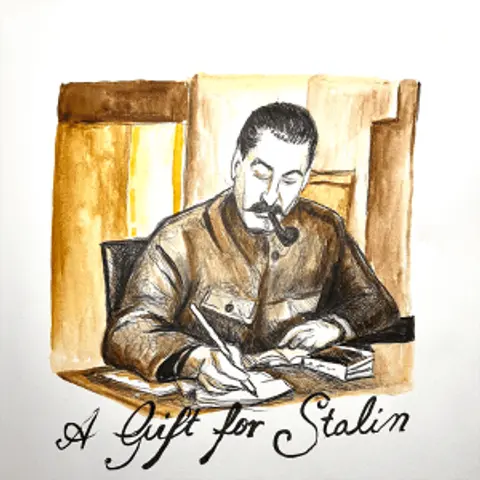
A Gift for Stalin, Part Two: The Accursed Share
It all started with a letter to Stalin in 1935. And when a Kremlin clerk opened it, there was a piece of shit inside. - Was the turd an insult? A way of saying to Stalin, “You’re a shit. Here’s some shit”? - Perhaps. -
March 31, 2023
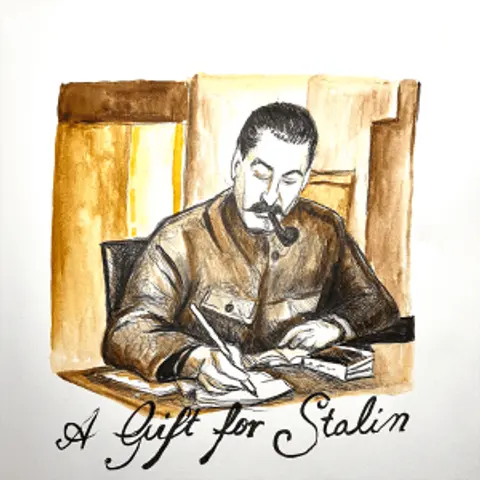
A Gift for Stalin, Part One: Dear Comrade Stalin
It’s Sunday, October 13, 1935, and someone, we don’t know who mails a letter from the outskirts of Moscow. It’s addressed: “Kremlin. To Comrade Stalin.” It arrives a few days later. And when Comrade Sentaretskya,